
A migration shouldn't be approached as a technical project.
It should be approached as an opportunity to simplify processes, eliminate inefficiencies, and get the organization ready for the challenges of the coming years. Companies that get this approach usually see faster results and a higher return on investment. Is your organization still working with NAV? At what stage of the migration are you: evaluation, planning, or execution? I’d love to hear about your experience and share best practices.
For years, Microsoft Dynamics NAV It has been the heart of business management for thousands of organizations. However, the market moves forward, security demands increase, and the need for innovation is becoming more and more obvious.
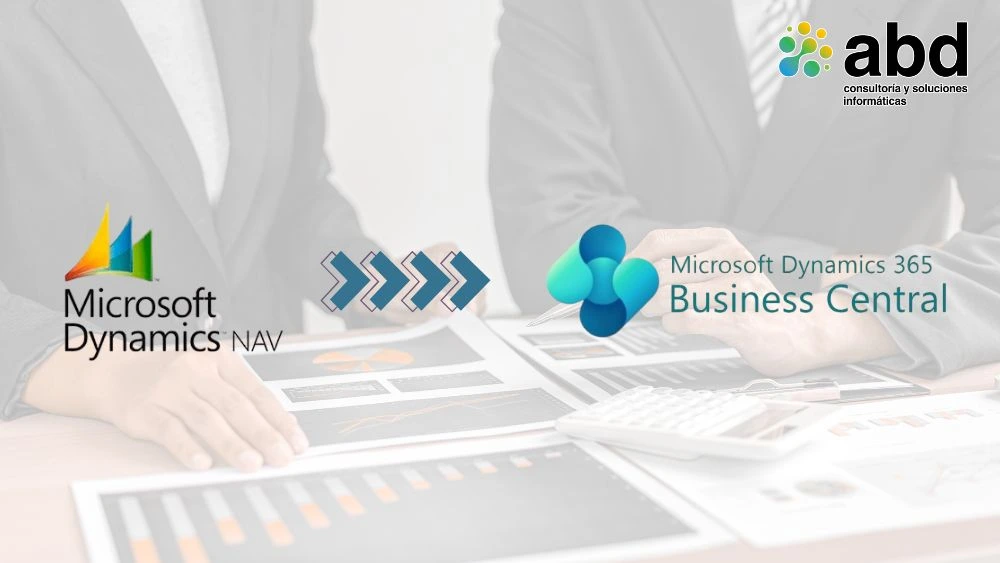
The question is no longer whether a company should migrar a Microsoft Dynamics 365 Business Central, but how to do it safely, efficiently, and with as little impact on the business as possible.
What are the benefits of migrating from Dynamics NAV to Business Central?
The companies that migrate to Business Central they usually get benefits that go way beyond just upgrading:
- Greater financial visibility.
- Automation of repetitive processes.
- Integration with Microsoft Copilot and AI tools.
- Native connection with Power BI.
- Access from any device.
- Greater security and regulatory compliance.
Why are companies moving away from Dynamics NAV now?
Why are companies migrating now? Many organizations are still using NAV versions that were implemented over a decade ago. Even though they keep working, they face major challenges:
- Difficulty integrating new tools.
- High maintenance costs.
- Lack of access to AI-based innovations.
- Limitations in mobility and remote work.
- Security risks associated with old infrastructure.
Business Central responds to these challenges by offering a modern, connected platform ready to grow at the pace of your business.
How to prepare a migration from Dynamics NAV to Business Central?

Before migrating, it's essential to know:
- Current version of NAV.
- Custom developments.
- Existing integrations.
- Volume and quality of the data.
- Critical processes for the business.
An initial diagnosis avoids surprises during the project.
Check out the Dynamics NAV customizations
One of the most common mistakes is trying to move all the historical changes to the new environment.
The question should be:
Do we still need this customization, or does Business Central already handle it by default?
In many cases, companies find that they can significantly simplify their processes.
Check and clean the data before the migration
Migrar datos obsoletos suele generar problemas posteriores.
It's recommended to check:
- Duplicate clients.
- Inactive suppliers.
- Unused items.
- Poorly defined dimensions.
- Unnecessary historical financial information.
A migration is an excellent opportunity to improve the quality of information.
How to ensure a migration to Business Central without errors?

Before putting the system into production, full tests must be carried out on:
- Sales.
- Shopping.
- Inventory.
- Finance.
- Production.
- Projects.
The goal is to make sure the business can operate normally from day one.
Training Business Central users
Train the users
Technology by itself doesn't guarantee success.
Users should understand:
- The new features.
- The changes in the processes.
- The best usage practices.
- The available automation possibilities.
A proper adoption speeds up the return on investment.
What business results does Business Central bring?
When I talk to a CEO, CFO, or Chief Operating Officer, they don't usually buy Business Central for its features. They do it for the business results that they get.
- Operational time savings
- Greater real-time financial visibility
- Error reduction
- Inventory optimization
- Increase in business productivity
- Scalability without increasing structure
- Integration with the Microsoft Ecosystem
- Better experience for audits and regulatory compliance
From Dynamics NAV to Business Central: going beyond just changing ERPs
Ultimately, beyond the features, Business Central allows the company to move from reactive management to data-driven management.
The conversation stops being: 'What happened last month?'
And it becomes: 'What's happening now and what decisions should we make today to improve the results?'
That is probably the biggest tangible benefit that Microsoft Dynamics 365 Business Central brings.
Are you thinking about moving from Dynamics NAV to Business Central?
At ABD Consulting and IT Solutions We have been helping companies optimize their management for over 35 years through technological solutions that deliver real results. If you are considering implementing Business Central or want to get more out of your current ERP, we would be happy to share our experience and help you identify improvement opportunities.