
Time tracking remains one of the most important obligations for companies in Spain. Although its implementation has been mandatory since 2019, many organizations still have questions about how to apply it correctly, especially in remote work or hybrid work environments.
From ABD Consulting, as an official Factorial partner and specialists in labor digitalization solutions, we have prepared this practical and downloadable guide to help you understand and correctly implement time tracking in your company throughout 2025.
What is time tracking and why does it remain essential in 2025?
Time tracking is the system that records each employee’s start and end times of the working day. Its main purpose is to ensure compliance with labor regulations, prevent abuses in overtime hours, and promote transparency between the company and the employee.
Since the publication of Royal Decree‑Law 8/2019, all companies are required to record the working hours of their employees, regardless of the type of contract. And with the consolidation of remote work and hybrid work models, the need for reliable digital tools has become essential.
Key updates and essential points of time tracking

Mandatory time tracking also for remote work
Time tracking must be maintained even when the employee works from home. The company must ensure that the clock‑in system works in all possible scenarios.
Breaks and overtime under control
Breaks (coffee, lunch, short pauses) must also be recorded in the system. Overtime hours must have the explicit authorization of the direct supervisor.
Digital control vs. paper-based time tracking
Although manual time tracking (paper-based) is still allowed in some cases, it is recommended to use certified time‑tracking software that ensures traceability, security, and legal compliance.
Differences between types of working hours
- Overtime hours: These exceed the agreed working schedule and must be paid or compensated with time off.
- Voluntary hours: These are performed to meet occasional needs and cannot exceed 80 per year.
- Mandatory hours: These are required due to force majeure. They do not count toward the annual limit, but they are also subject to restrictions.
Important: Employees under 18 years of age or those working night shifts are not allowed to perform overtime.
Using Excel to clock in? It’s time to switch to dedicated time‑tracking software
Many small businesses still record working hours in Excel. Although it is a valid option, it does not meet the traceability or security requirements demanded by the Labor Inspectorate.
With a software solution like Factorial, the entire clock‑in process becomes automated, ensuring compliance, efficiency, and transparency.
Advantages of using HR software for time tracking
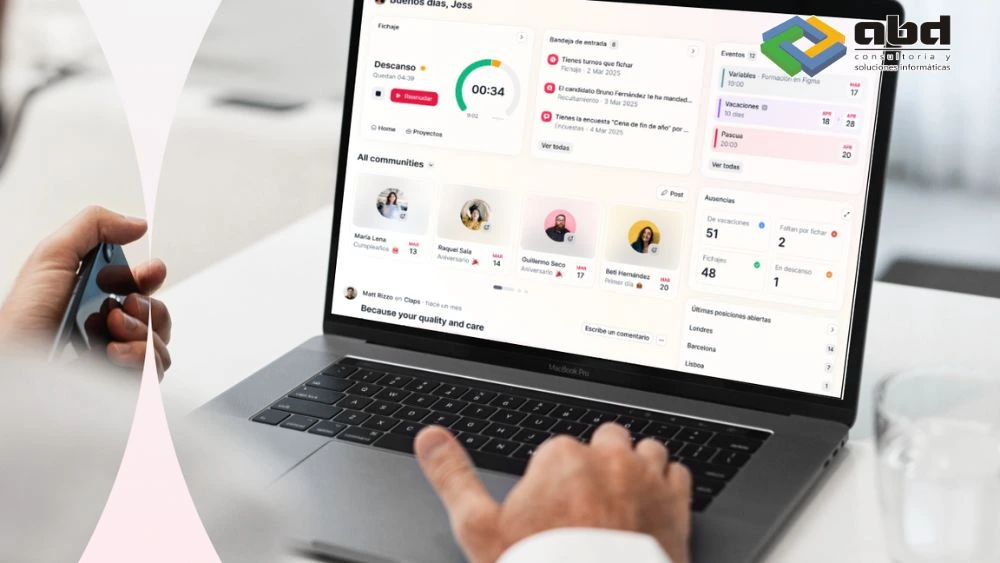
- Time tracking from any device (computer or mobile).
- Geolocated clock‑ins or time‑restricted clock‑ins.
- Alerts to prevent missed clock‑ins.
- Digital signature and document management.
- Real‑time monitoring of the team’s status.
How to correctly implement time tracking in your company
Here are some practical tips included in our downloadable guide:
- Define a clear clock‑in policy in your employee handbook.
- Use automatic reminders to help build the habit.
- Reward compliance using gamification techniques.
- Ask your team about any difficulties they may be experiencing with the current system.
- Implement gradual disciplinary measures in cases of repeated non‑compliance.
Download the 2025 Time Tracking Guide here and discover how to adapt your company to current regulations without complications.
ABD Consulting: experts in time‑tracking digitalization

At ABD Consulting and IT Solutions, we are a Factorial partner and have more than 30 years of experience helping companies modernize their internal processes. If you need to implement a certified time‑tracking system tailored to your organization, we support you from configuration all the way to training your teams.
Request a personalized demo or get in touch with us and transform the way you manage working time.